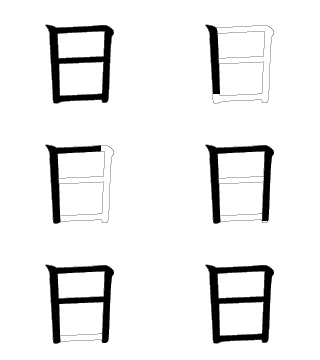
65E5 - 日
Meaning: day, sun
Onyomi: NICHI, JITSU
Kunyomi: hi, -ka
Strokes: 4
Vocabulary:
日本 – nihon – Japan
今日 – kyou – today
毎日 – mainichi – every day
Learn Nihongo, learn Japanese vocabulary, grammar and kanji
65E5 - 日
Meaning: day, sun
Onyomi: NICHI, JITSU
Kunyomi: hi, -ka
Strokes: 4
Vocabulary:
日本 – nihon – Japan
今日 – kyou – today
毎日 – mainichi – every day

4E09 - 三
Meaning: three
Onyomi: SAN
Kunyomi: mit(tsu), mi-
Strokes: 3
Vocabulary:
三つ – mittsu – three
三越百貨店 – mitsukoshi hyakkaten – Mitsukoshi department stores

4E8C - 二
Meaning: two
Onyomi: NI
Kunyomi: futa(tsu), futa-
Strokes: 2
Vocabulary:
二つ – futatsu – two
二人 – futari – two people, two of us

4E00 - 一
Meaning: one
Onyomi: ICHI, ITSU
Kunyomi: hito(tsu), hito-
No. of strokes: 1
Vocabulary:
一つ – hitotsu – one
一口 – hitokuchi – one bite
一人 – hitori – alone
The purpose of the JLPT is to evaluate and certify Japanese language proficiency of non-native speakers. It is the largest scale test for Japanese in the world and used by many companies and universities to assess the Japanese language skills of applicants.
There are 5 levels for the JLPT. Level 5 is the entry level and Level 1 is the highest level of proficiency. Test is designed to assess the reading and writing skills of applicants and also requires knowledge of vocabulary and grammar.
Unfortunately the Japan Foundation does not publish lists of vocabulary, grammar and characters required for each level. The only way to provide lists as on this page is to analyze the material from the published tests with a more or less high accuracy.
It is organized by the Japan Foundation and tests are held regularly in Japan as well as many countries and cities outside Japan.
This table shows the requirements for kanji and vocabulary by proficiency level:
|
|||||||||||||||||||||||||||
Please check the official website of the test organization for more information. http://www.jlpt.jp/e/



 NIHONGO ICHIBAN