Kanji Card – 仲 – naka

Kanji – JLPT N3 – 仲

仲

4EF2 - 仲

Meaning relation, relationship
Onyomi chuu
Kunyomi naka
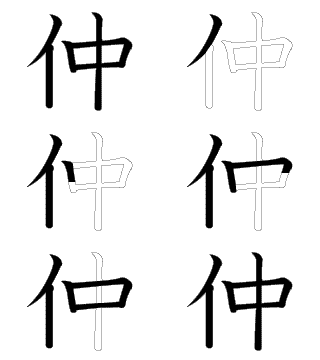
Strokes 6 (click on the pick to start the video)

Vocabulary including the kanji 仲

Kanji Furigana Romaji Meaning JLPT
 仲 なか naka personal relationship
仲介 ちゅうかい chuukai agency, intermediation

Kanji Radicals inside 仲

Radical Radical name Meaning
   nimben Person
 –
 –

JAPANESE EXAMPLE SENTENCES USING THe KANJI 仲

Kanji 私は上司と仲が悪いです。
Furigana わたしはじょうしとなかがわるいです。
Romaji watashi wa joushi to naka ga warui desu.
English I have a bad relationship with my superior.

SIMILAR KANJI to 仲


A newbie’s journey through Japanese: Step 1 — Learn the kana

Mina-san, ohayou gozaimasu! Mike desu. Welcome to my second post about learning the Japanese language from the standpoint of an absolute beginner. Today I am going to cover a very, very basic step of learning Japanese. It is so essential that it should be a no-brainer. Yet I often see questions posted to online forums about translating even the most elementary phrases (like ohayou gozaimasu) from these most basic of Japanese writing systems.

I am talking, of course, about the kana, specifically the hiragana and katakana systems. These two writing systems should be your lifeblood when first learning the language. They are not only the keys to help you learn Japanese at a faster rate; they also set the fundamentals that will give you the study habits you need to eventually tackle the kanji. In fact, if you can get yourself in a good rhythm with your studying, you will start finding yourself using at least the most basic kanji (such as the characters for numbers, days and months) at least as often as the kana. It all starts here.

Japanese can often feel unfair to the beginner. A case in point is learning the kana. Before I started using the Internet as my primary source for learning the characters, I bought “Let’s Learn Hiragana” by Yasuko Kosaka Mitamura off of Amazon.com. (It is a great first purchase if you want a formalized way of learning hiragana, with lots of drills and exercises to keep your memory sharp. The downside is you will not understand, just by reading, how to pronounce characters like “tsu” and “fu” correctly.)

After about a month of study, and constant rewriting of the characters into a large notebook whenever I had a free moment, I finally had the hiragana down. Alright, I thought, 46 characters memorized, plus the different voicings and the contracted forms like kyo, gyu, etc.! I can do this! Then I saw there was another whole set to learn with katakana, for the exact same sounds! (Hiragana is usually used in native words, while katakana is mostly used in foreign or loanwords.) Suddenly, my big achievement seemed very small. Especially when I realized the quirks of these writing systems, such as the katakana for “sa” looking very close to the hiragana for “se,” and the katakana that resemble smiley faces (“shi” and “tsu”) looking almost identical.

There is no easy way around this, except by drilling the kana over and over again until you have it down. Yes, there are little tricks you can pick up. For example, the two lines for “shi” that make up what look like eyes in a smiley face are on the “side,” (both “shi” and “side” begin with s) whereas the two eyes in “tsu” begin on the “top” (both “tsu” and “top” begin with t). Other than those mnemonic devices, however, you are pretty much on your own.

You may think this is a very difficult task, but if you keep at it, you will master them. The best way to learn is to start following Japanese blogs, Twitter accounts, etc. To help me become comfortable with the kana and some of the basic kanji, I created a list on Twitter to follow lots of Japanese accounts that seemed interesting to me. Do I understand everything that is said on these accounts? Absolutely not. I think I might comprehend about 2 percent of what is written, especially with the liberal use of much more advanced kanji. But it is a great way to practice (and to learn new words if you have a dictionary handy). Here is the link. I hope you find it useful, too. Feel free to comment with some of the links you find helpful for learning the language.

The most important thing I can say about learning Japanese is to wean yourself off of romaji immediately. It is fine to use in a pinch, such as when I opened this post by writing “Ohayou gozaimasu.” But really, the best way to learn Japanese is to discard romaji from your learning as quickly as you can and replace it with kana and kanji. Plunging yourself into the deep end by following Japanese Twitter accounts is one great way to accomplish this. Do not let romaji be your crutch.

Next time, I will talk more about another extremely important step in learning Japanese — listening to native speakers talk. I will share some information on the Japanese podcasts I listen to and what they have taught me so far. Mata ne!

Kanji Card – 置

Kanji – JLPT N3 – 置

置

7F6E - 置

Meaning to set, to establish, place
Onyomi CHI
Kunyomi o(ku)
Strokes 13 (click on the pick to start the video)

Vocabulary including the kanji 置

Kanji Furigana Romaji Meaning JLPT
 置く おく oku to put
位置 いち ichi place

Kanji Radicals inside 置

Radical Radical name Meaning
 –
 –
 –

JAPANESE EXAMPLE SENTENCES USING THe KANJI 置

Kanji  花を窓辺に置いて下さい。
Furigana  はなをまどべにおいてください。
Romaji  hana o madobe ni oite kudasai.
English  Please place the flowers at the window.

SIMILAR KANJI to 置

Kanji Card – 単

Kanji – JLPT N3 – 単

単

5358 - 単

Meaning one, easy
Onyomi TAN
Kunyomi
Strokes 9 (click on the pick to start the video)

Vocabulary including the kanji 単

Kanji Furigana Romaji Meaning JLPT
簡単 かんたん kantan easy
単価 たんか tanka unit price

Kanji Radicals included in 単

Radical Radical name Meaning
 –
 –
 –

Japanese example sentence with 単

Kanji 資材の単価について交渉した。
Furigana しざいのたんかについてこうしょうした。
Romaji shizai no tanke ni tsuite koushou shita.
English I negotiated the unit price of raw material.

Similar kanji to 単


Kanji Card – 達

Kanji – JLPT N3 – 達

達

9054 - 達

Meaning arrive
Onyomi TATSU
Kunyomi
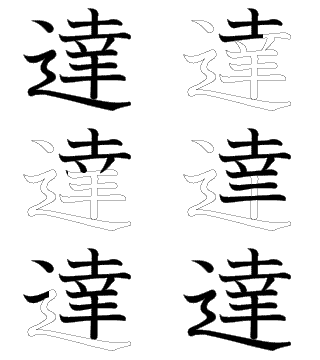
Strokes 12 (click on the pick to start the video)

Vocabulary including the kanji 達

Kanji Furigana Romaji Meaning JLPT
 達成 たっせい tassei achievement
 友達 ともだち tomodachi friend

Kanji Radicals inside 達

Radical Radical name Meaning
 –
 –
 –

JAPANESE EXAMPLE SENTENCES USING THe KANJI 達

Kanji 今年の予算を達成しました。
Furigana ことしのよさんをたっせいしました。
Romaji kotoshi no yosan o tassei shimashita.
English We achieved this year’s budget.

SIMILAR KANJI to 達


Subscribe & stay updated

If you enjoyed reading this then please consider subscribing by email and receive instant, daily or weekly updates.

Just click the SIGN ME UP! button on the right top of the page and start receiving  Japanese language updates.