A newbie’s journey through Japanese

Konnichiwa. Mike desu. I am a relatively new student to Japanese, having only begun learning the language this past March. I cannot believe that eight months have gone by since I first picked up a book on learning hiragana. In some ways, I feel like I have much more than eight months’ worth of information stored in my brain. I have already learned hiragana, katakana, about 50 kanji (though I am admittedly shaky on some of the readings) and a couple counters, along with some basic vocabulary, sentence structures and grammar patterns. Yet even with that much memorized, even with that much practice, I doubt I could even understand half of what came out of the mouth of a first-grader in Japan.

Japanese, to this native English speaker, seems incredibly complex, labyrinthine and fascinating. It feels like a topic where you could study for 10 years and still have plenty to learn. Some might find that intimidating. In some ways it is. There are plenty of nights when I scratch kanji into a notebook while balancing kanji reference books in my lap, trying to remember the different readings and proper stroke orders, feeling completely overwhelmed. However, it is also a challenge I am more than willing to take on.

I began wanting to learn Japanese when I started replaying the old Nintendo games of my youth. I heard whispers on the Internet that many of the games I had grown up loving were actually bastardized North American localizations where much of the original Japanese content was lost. That was part of my reason for learning, so that someday I could play the games unaltered and understand them fully. The other deciding factor was the earthquake and tsunami earlier this year. Seeing the raw video footage and photos from that disaster, I realized I was not only watching a historic event of great trauma and tragedy; I was also confronting my own ignorance of a language that more than 130 million people know and use daily.

In this new blog, I hope to share some of my methods as an absolute beginner for learning this one-of-a-kind language. They include some pretty obvious techniques like tackling hiragana and katakana immediately, so you can wean yourself off of romaji. However, I also use some methods that might not seem like first steps for a newbie. I’m talking about things like following Japanese Twitter accounts, watching Japanese-only content on YouTube, and listening to many different podcasts where Japanese is the only language spoken.

If you are just starting out with the language, you might think these methods are next to useless because so much will be incomprehensible. But believe me, the sooner you can start immersing yourself, the better. You’ll be surprised what you can pick up just by opening yourself up to all the different ways to see, read, hear and react to Japanese.

I will offer some specific examples in a future post. Until then, thank you for reading. Feel free to leave a comment detailing your own journey into the language. I would love to hear about your experiences, as we all continue on this journey together into fluency.
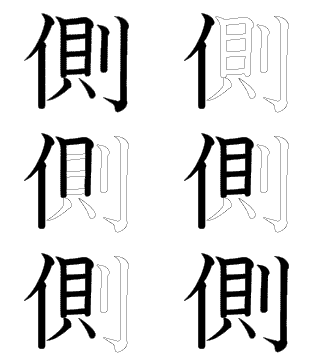
Kanji Card – 側 – gawa

Kanji – JLPT N3 – 側

側

5074 - 側

Meaning side
Onyomi SOKU
Kunyomi kawa, soba
Strokes 11 (click on the pick to start the video)

Vocabulary including the kanji 側

Kanji Furigana Romaji Meaning JLPT
がわ gawa side
 左側 ひだりがわ hidarigawa left side

Kanji Radicals inside 側

Radical Radical name Meaning
 –
 –
 –

JAPANESE EXAMPLE SENTENCES USING THe KANJI 側

Kanji 学校の右側に病院があります。
Furigana がっこうのみぎがわにびょういんがあります。
Romaji gakkou no migigawa ni byouin ga arimasu.
English There is a hospital on the right side of the school.

SIMILAR KANJI to 側


Subscribe & stay updated

If you enjoyed reading this then please consider subscribing by email and receive instant, daily or weekly updates.

Just click the SIGN ME UP! button on the right top of the page and start receiving  Japanese language updates.


Kanji Card – 争

Kanji – JLPT N3 – 争

争

4E89 - 争

Meaning to fight, dispute
Onyomi SOU
Kunyomi araso(u)
Strokes 6 (click on the pick to start the video)

Vocabulary including the kanji 争

Kanji Furigana Romaji Meaning JLPT
戦争 せんそう sensou war
競争 きょうそう kyousou competition

Kanji Radicals inside 争

Radical Radical name Meaning
 –
 –
 –

JAPANESE EXAMPLE SENTENCES USING THe KANJI 争

Kanji 戦争のない平和な生活を皆望んでいる。
Furigana せんそうのないへいわのせいかつをみんなのぞんでいる。
Romaji sensou no nai heiwa no seikatsu o minna nozonde iru.
English Everyone wishes for a life in peace without war.

SIMILAR KANJI to 争

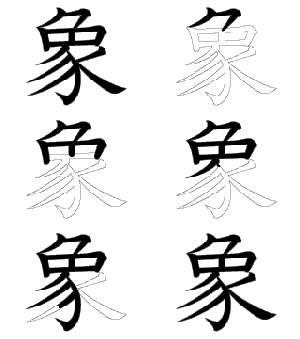
象

picture, form, elephant


Subscribe & stay updated

If you enjoyed reading this then please consider subscribing by email and receive instant, daily or weekly updates.

Just click the SIGN ME UP! button on the right top of the page and start receiving  Japanese language updates.


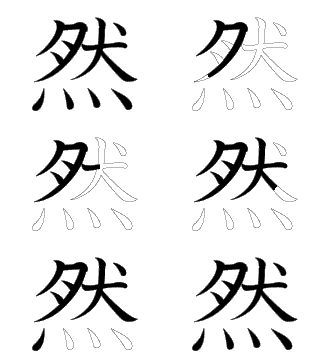
Kanji Card – 然

Kanji – JLPT N3 – 然

然

7136 - 然

Meaning yes, but
Onyomi SEN, NEN
Kunyomi
Strokes 12 (click on the pick to start the video)

Vocabulary including the kanji 然

Kanji Furigana Romaji Meaning JLPT
 自然 しぜん shizen nature
 当然 とうぜん touzen natural , as a matter of course

Kanji Radicals inside 然

Radical Radical name Meaning
 –
 –
 –

JAPANESE EXAMPLE SENTENCES USING THe KANJI 然

Kanji 久しぶりに田舎に帰って自然を満喫した。
Furigana ひさしぶりにいなかにかえってしぜんをまんきつした。
Romaji hisashiburi no inaka ni kaette shizen o mankitsu shita.
English I went to the country side after a long time and fully enjoyed nature.

SIMILAR KANJI to 然


Subscribe & stay updated

If you enjoyed reading this then please consider subscribing by email and receive instant, daily or weekly updates.

Just click the SIGN ME UP! button on the right top of the page and start receiving  Japanese language updates.


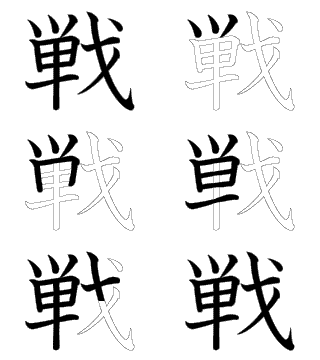
Kanji Card – 戦

Kanji – JLPT N3 – 戦

戦

6226 - 戦

Meaning war, fight, battle
Onyomi SEN
Kunyomi tataka(u), ikusa
Strokes 13 (click on the pick to start the video)

Vocabulary including the kanji 戦

Kanji Furigana Romaji Meaning JLPT
 戦 いくさ ikusa battle
戦争 せんそう sensou war
戦う たたかう tatakau to fight

Kanji Radicals inside 戦

Radical Radical name Meaning
 –
 –
 –

JAPANESE EXAMPLE SENTENCES USING THe KANJI 戦

Kanji 戦争のない平和な生活を皆望んでいる。
Furigana せんそうのないへいわのせいかつをみんなのぞんでいる。
Romaji sensou no nai heiwa no seikatsu o minna nozonde iru.
English Everyone wishes for a life in peace without war.

SIMILAR KANJI to 戦


Subscribe & stay updated

If you enjoyed reading this then please consider subscribing by email and receive instant, daily or weekly updates.

Just click the SIGN ME UP! button on the right top of the page and start receiving  Japanese language updates.