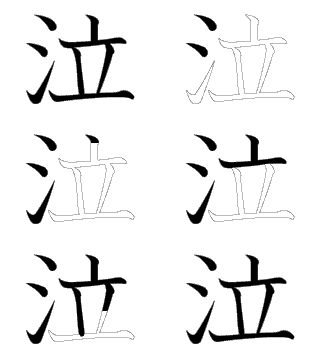
Kanji Card – 泣

Kanji – JLPT N3 – 泣

泣

6CE3 - 泣

Meaning to cry
Onyomi KYUU
Kunyomi na(ku)
Strokes 8 (click on the pick to start the video)

Vocabulary

Kanji Furigana Romaji Meaning JLPT
泣く なく naku to cry
号泣 ごうきゅう goukyuu crying aloud, lamentation

Kanji Radicals

Radical Radical name Meaning
 –
 –
 –

JAPANESE EXAMPLE SENTENCES USING THIS KANJI

Kanji 親戚がなくなったので泣いてしまいました。
Furigana しんせきがなくなったのでないてしまいました。
Romaji shinseki ga naku natta node naite shimaimashita.
English I cried because a relative has passed away.

SIMILAR KANJI

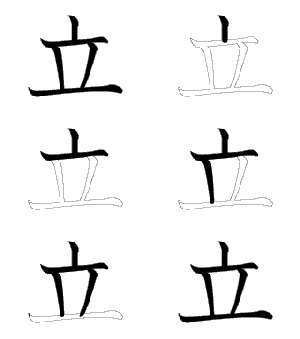
立

7ACB - 立


Subscribe & stay updated

If you enjoyed reading this then please consider subscribing by email and receive instant, daily or weekly updates.

Just click the SIGN ME UP! button on the right top of the page and start receiving  Japanese language updates.


Kanji Card – 議

Kanji – JLPT N3 – 議

議

8B70 - 議

Meaning debate, consultation
Onyomi GI
Kunyomi
Strokes 20 (click on the pick to start the video)

Vocabulary

Kanji Furigana Romaji Meaning JLPT
会議 かいぎ kaigi meeting
不思議 ふしぎ fushigi wonder, mystery, curiosity

Kanji Radicals

Radical Radical name Meaning
 –
 –
 –

Japanese examples sentence using this kanji

Kanji 私は明日の会議に出席する予定です。
Furigana わたしはあしたのかいぎにしゅっせきするよていです。
Romaji watashi wa ashita no kaigi ni shusseki suru yotei desu.
English I plan to attend tomorrow’s meeting.

SIMILAR KANJI

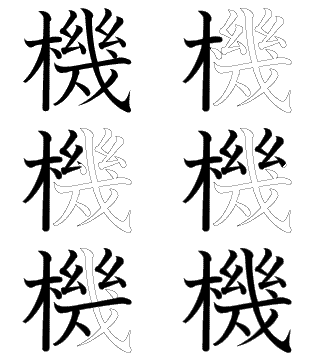
機

machine, opportunity


Subscribe & stay updated

If you enjoyed reading this then please consider subscribing by email and receive instant, daily or weekly updates.

Just click the SIGN ME UP! button on the right top of the page and start receiving  Japanese language updates.


Kanji Card – 機

Kanji – JLPT N3 – 機

機

6A5F - 機

Meaning machine, opportunity
Onyomi KI
Kunyomi hata
Strokes 16 (click on the pick to start the video)

Vocabulary

Kanji Furigana Romaji Meaning JLPT
機会 きかい kikai chance, opportunity, occasion
飛行機 ひこうき hikouki airplane
機械 きかい kikai machine

Kanji Radicals

Radical Radical name Meaning
 –
 –
 –

JAPANESE EXAMPLE SENTENCES USING THIS KANJI

Kanji  この機会に掃除をしましょう。
Furigana  このきかいにそうじしましょう。
Romaji  kono kikai ni souji shimashou.
English  Let’s clean it up at this occasion.

SIMILAR KANJI


Subscribe & stay updated

If you enjoyed reading this then please consider subscribing by email and receive instant, daily or weekly updates.

Just click the SIGN ME UP! button on the right top of the page and start receiving  Japanese language updates.

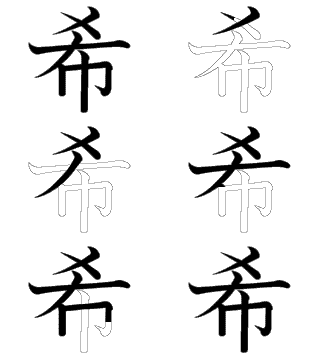
Kanji Card – 希

Kanji – JLPT N3 – 希

希

5E0C - 希

Meaning wish, scarceness
Onyomi KI
Kunyomi
Strokes 7 (click on the pick to start the video)

Vocabulary

Kanji Furigana Romaji Meaning JLPT
希望 きぼう kibou hope, wish

Kanji Radicals

Radical Radical name Meaning
 –
 –
 –

JAPANESE EXAMPLE SENTENCES USING THIS KANJI

Kanji 貴方の希望は何ですか?
Furigana あなたのきぼうはなんですか?
Romaji anata no kibou wa nan desu ka?
English What is your wish?

SIMILAR KANJI


Subscribe & stay updated

If you enjoyed reading this then please consider subscribing by email and receive instant, daily or weekly updates.

Just click the SIGN ME UP! button on the right top of the page and start receiving  Japanese language updates.

Japanese grammar of verbs for JLPT N5

All about the grammar of verbs for the JLPT N5

This is a list of grammar for verbs required to pass the JLPT N5. Place the curser above the grammar form name to get more detailed information.

VERB + masu-form (〜ます)

Kanji 私は毎日新聞を読みます。
Furigana わたしはまいにちしんぶんをよみます。
Romaji watashi wa mainichi shinbun o yomimasu.
English I read newspaper every day.

VERB + masen (〜ません)

Kanji 私の母はアルコールを飲みません。
Furigana わたしのはははアルコールをのみません。
Romaji watashi no haha wa arukooru o nomimasen.
English My mother does not drink alcohol.

VERB + mashita (〜ました)

Kanji 私は昨日本を買いました。
Furigana わたしはきのうほんをかいました。
Romaji watashi wa kinou hon o kaimashita.
English I bought a book yesterday.

VERB + masen deshita (~ませんでした)

Kanji 私はまだ朝ご飯を食べませんでした。
Furigana わたしはまだあさごはんをたべませんでした。
Romaji watashi wa mada asagohan o tabemasen deshita.
English I have not yet eaten breakfast.


VERB + plain form

Kanji 日本人は毎日御飯を食べる。
Furigana にほんじんはまいにちごはんをたべる。
Romaji nihonjin wa mainichi gohan o taberu.
English Japanese eat rice every day.

VERB + NAI form (~ない)

Kanji 私の父はテレビを見ない。
Furigana わたしのちちはテレビをみない。
Romaji watashi no chichi wa terebi o minai.
English My father does not watch TV.

VERB + TA FORM (~た)

Kanji  私は新聞を読んだ。
Furigana  わたしはしんぶんをよんだ。
Romaji  watashi wa shinbun o yonda.
English  I read a newspaper.

VERB + nakatta FORM (~なかった)

Kanji 私はまだ食べなかった。
Furigana わたしはまだたべなかった。
Romaji watashi wa mada tabenakatta.
English I have not eaten yet.

VERB + te FORM (~て)


Kanji  朝ご飯を食べて学校に行きました。
Furigana  あさごはんをたべてがっこうにいきました。
Romaji  asagohan o tabete gakkou ni ikimashita.
English I went to school after eating breakfast.

VERB + TE ARU(~てある)

Kanji このノートに漢字が書いてあります。
Furigana こののーとにかんじがかいてあります。
Romaji kono nooto ni kanji ga kaite arimasu.
English There is a kanji writing on this notebook.

VERB + TE iRU(~ている)

Kanji 私は新聞を読んでいます。
Furigana わたしはしんぶんをよんでいます。
Romaji watashi wa shinbun o yonde imasu.
English I am reading a newspaper.

VERB + naide(~ないで)

Kanji 朝ご飯を食べないで学校に行きました。
Furigana あさごはんをたべないでがっこうにいきました。
Romaji asagohan o tabenaide gakkou ni ikimashita.
English I went to school without eating breakfast.