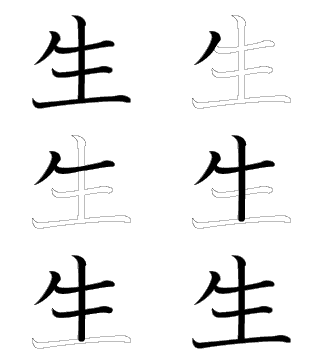
Kanji Card – 生

生

751F – 生

Meaning:to live, to grow, be born, raw

Onyomi: SEI, SHOU

Kunyomi: i(kiru), u(mu), ha(yasu), nama, ki

Strokes: 5  (click on pic to start video)

Vocabulary:

生 – nama – pure, undiluted, raw, crude

学生 – gakusei – student

誕生日 – tanjoubi – birthday

生まれる – umareru – to be born

生きる – ikiru – to live, to exist
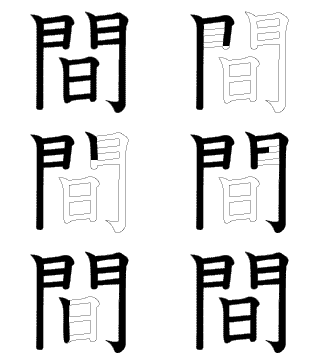
間

9593 - 間

Meaning: time, time span

Onyomi: KAN, KEN

Kunyomi: aida

Strokes: 12  (click on pic to start video)

Vocabulary:

間 – aida – period of time

時間 – jikan – time

週間 – shuukan – a full week

人間 – ningen – human being, person

Expressing a position in Japanese

Description

In Japanese positions are expressed by putting position-noun behind the noun whose position is being described. Both nouns are connected using the particle の (no). In addition the Particles に (ni) or で (de) used behing the position-noun indicated that it is about a location.

The general structure of the description of a position is as follows:

[Noun] + の (no) + [position noun] + に (ni) or で (de)

Example

This example gives you an idea on how a sentence explaining a position looks like.

Position-nouns

Kanji Furigana Romaji Translation
うえ ue above, on, over
した shita under, below
まえ mae in front of
後ろ うしろ ushiro behind
みぎ migi right hand of
ひだり hidari left hand of
さき saki before
よこ yoko next to
隣り となり tonari next to
そば soba next to
なか naka inside
へん hen around here
かど kado at the corner of
すみ sumi in the corner of
おく oku inside the building
そと soto outside
うち uchi
あいだ aida in between
近く ちかく chikaku close to, near to

Calendar days in Japanese

The expression of calendar days requires the Japanese as well as the Chinese basic numbers systems. Japanese numbers are used from the first to the tenth as well as for the 14th and 24th day. All other days use the Chinese numbering system. Be careful for the 20th day, which is irregular.

Day Kanji Furigana Romaji
1 一日 ついたち tsuitachi
2 二日 ふつか futsuka
3 三日 みっか mikka
4 四日 よっか yokka
5 五日 いつか itsuka
6 六日 むいか muika
7 七日 なのか nanoka
8 八日 ようか youka
9 九日 ここのか kokonoka
10 十日 とおか tooka
11 十一日 じゅういちにち juuichinichi
12 十二日 じゅうににち juuninichi
14 十四日 じゅうよっか juuyoka
15 十五日 じゅうごにち juugonichi
20 二十日 はつか hatsuka
21 二十一日 にじゅういちにち nijuuichinichi
24 二十四日 にじゅうよっか nijuuyokka
31 三十一日 さんじゅういちにち sanjuuichinichi


List of Japanese classificators

When counting in Japanese certain special counters need to be applied depending on the objects or subject, which is being counted. Below you will find a list of the most commonly used counters.

Objects

Subject

Kanji

Furigana

Romaji
Examples
books

さつ

satsu

一冊 (issatsu), 二冊 (nisatsu), etc.
buildings

けん

ken

一軒 (ikken), 二軒 (niken), etc.
cups

はい

hai

一杯 (ippai), 二杯 (nihai), etc.
flat objects

まい

mai

一枚 (ichimai), 二枚 (nimai), etc.
floors

かい

kai

一階 (ikkai), 二階 (nikai), etc.
machines, cars

だい

dai

一台 (ichidai), 二台 (nidai), etc.
small objects

ko

一個 (ikko), 二個 (niko),
Yen

えん

en

一円 (ichien), 二円 (nien),

Living things

Subject

Kanji

Furigana

Romaji
Examples
people

にん

nin

一人(hitori), 二人 (futari), 三人 (sannin) etc.
small animals

ひき

hiki

一匹 (ippiki), 二匹 (nihiki), etc.
birds & rabbits

wa

一羽 (ichiwa), 二羽 (niwa), etc.
large animals

とう

tou

一頭 (ittou), 二頭 (nitou), etc.

Occurrences & ranking

Subject
Kanji

Furigana

Romaji
Examples
stays over night

はく

haku

一泊 (ippaku), 二泊 (nihaku), etc.
times

かい

kai

一回 (ikkai), 二回 (nikai),
times

do

一度 (ichido), 二度 (nido),
rank

ばん

ban

一番 (ichiban), 二番 (niban),
book, newspaper issue

ごう

gou

一号 (ichigou), 二号 (nigou),

Time

Subject

Kanji 

Furigana 

Romaji 
Examples
seconds

びょう

byou

一秒 (ichibyou), 二秒 (nibyou),
minutes

ふん

fun

一分 (ippun), 二分 (nifun, etc.),
clock hours

ji

一時 (ichiji), 二時 (niji, etc.),
hours (duration)

時間

じかん

jikan

一時間 (ichijikan), 二時間 (nijikan, etc.),
weeks (duration)

週間

しゅうかん

shuukan

一週間 (isshuukan), 二週間 (nishuukan, etc.),
months (duration)

ヶ月

かげつ

kagetsu

一ヶ月 (ikkagetsu), 二ヶ月 (nikagetsu, etc.),
years (duration)

年間

ねんかん

nenkan

一年間 (ichinenkan), 二年間 (ninenkan, etc.),
years (age)

さい

sai

一才 (issai), ニ才 (nisai, etc.),
years (age)

さい

sai

一才 (issai), ニ才 (nisai, etc.),