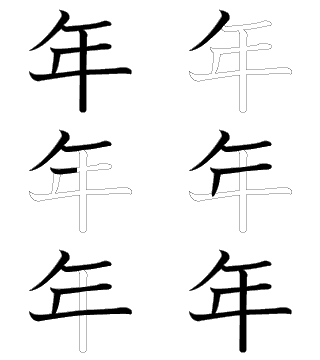
5E74 - 年
Meaning:year
Onyomi: NEN
Kunyomi: toshi
Strokes: 6 (click on the pic to start the video)
Vocabulary:
一年 – ichinen – one year
今年 – kotoshi – this year
Learn Nihongo, learn Japanese vocabulary, grammar and kanji
5E74 - 年
Meaning:year
Onyomi: NEN
Kunyomi: toshi
Strokes: 6 (click on the pic to start the video)
Vocabulary:
一年 – ichinen – one year
今年 – kotoshi – this year
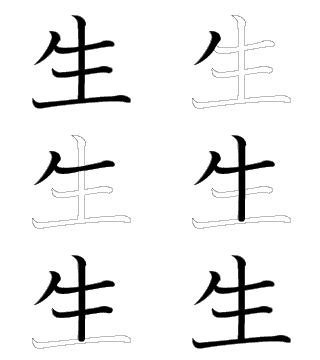
751F – 生
Meaning:to live, to grow, be born, raw
Onyomi: SEI, SHOU
Kunyomi: i(kiru), u(mu), ha(yasu), nama, ki
Strokes: 5 (click on pic to start video)
Vocabulary:
生 – nama – pure, undiluted, raw, crude
学生 – gakusei – student
誕生日 – tanjoubi – birthday
生まれる – umareru – to be born
生きる – ikiru – to live, to exist
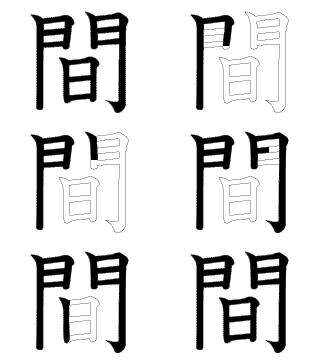
9593 - 間
Meaning: time, time span
Onyomi: KAN, KEN
Kunyomi: aida
Strokes: 12 (click on pic to start video)
Vocabulary:
間 – aida – period of time
時間 – jikan – time
週間 – shuukan – a full week
人間 – ningen – human being, person
In Japanese positions are expressed by putting position-noun behind the noun whose position is being described. Both nouns are connected using the particle の (no). In addition the Particles に (ni) or で (de) used behing the position-noun indicated that it is about a location.
The general structure of the description of a position is as follows:
[Noun] + の (no) + [position noun] + に (ni) or で (de)
This example gives you an idea on how a sentence explaining a position looks like.
| Kanji | Furigana | Romaji | Translation |
| 上 | うえ | ue | above, on, over |
| 下 | した | shita | under, below |
| 前 | まえ | mae | in front of |
| 後ろ | うしろ | ushiro | behind |
| 右 | みぎ | migi | right hand of |
| 左 | ひだり | hidari | left hand of |
| 先 | さき | saki | before |
| 横 | よこ | yoko | next to |
| 隣り | となり | tonari | next to |
| 側 | そば | soba | next to |
| 中 | なか | naka | inside |
| 辺 | へん | hen | around here |
| 角 | かど | kado | at the corner of |
| 隅 | すみ | sumi | in the corner of |
| 奥 | おく | oku | inside the building |
| 外 | そと | soto | outside |
| 内 | うち | uchi | |
| 間 | あいだ | aida | in between |
| 近く | ちかく | chikaku | close to, near to |
The expression of calendar days requires the Japanese as well as the Chinese basic numbers systems. Japanese numbers are used from the first to the tenth as well as for the 14th and 24th day. All other days use the Chinese numbering system. Be careful for the 20th day, which is irregular.
| Day | Kanji | Furigana | Romaji |
| 1 | 一日 | ついたち | tsuitachi |
| 2 | 二日 | ふつか | futsuka |
| 3 | 三日 | みっか | mikka |
| 4 | 四日 | よっか | yokka |
| 5 | 五日 | いつか | itsuka |
| 6 | 六日 | むいか | muika |
| 7 | 七日 | なのか | nanoka |
| 8 | 八日 | ようか | youka |
| 9 | 九日 | ここのか | kokonoka |
| 10 | 十日 | とおか | tooka |
| 11 | 十一日 | じゅういちにち | juuichinichi |
| 12 | 十二日 | じゅうににち | juuninichi |
| 14 | 十四日 | じゅうよっか | juuyoka |
| 15 | 十五日 | じゅうごにち | juugonichi |
| 20 | 二十日 | はつか | hatsuka |
| 21 | 二十一日 | にじゅういちにち | nijuuichinichi |
| 24 | 二十四日 | にじゅうよっか | nijuuyokka |
| 31 | 三十一日 | さんじゅういちにち | sanjuuichinichi |



 NIHONGO ICHIBAN