Particle より (yori)

Particle より (yori)

This particle can be used in two situations expressing a comparison or having the meaning “from”.

1. Comparison:

In this case the particle より (yori) is used to compare two nouns with each other.
 

Kanji 金は銀より高いです。
Furigana きんはぎんよりたかいです。
Romaji kin wa gin yori takai desu.
English Gold is more expensive than silver.


2. Meaning “from”:

In this case the particle より (yori) is used to express receiving something from someone else. It can be used as an alternative to the Particle から (kara).
 

Kanji この本は先生より貰いました。
Furigana このほんはせんせいよりもらいました。
Romaji kono hon wa sensei yori moraimashita,
English I received this book from my teacher.


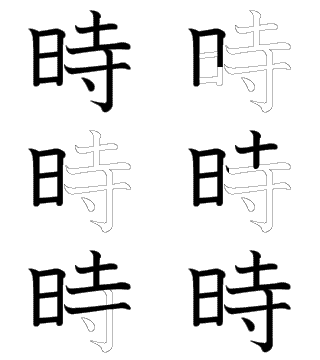
Kanji Card – 時

時

6642 – 時

Meaning: time, hour

Onyomi: JI

Kunyomi: toki

Strokes: 10

Vocabulary:

時々 – tokidoki – sometimes

時間 – jikan – time

時計 – tokei – clock, watch

Particle から (kara)

This particle describes the beginning of something and can be used in a temporary or geographical context or it has the meaning “from”.

1. Temporary context:

In this context the particle から (kara) is used to express that a period of time starts.
 

Kanji 会議は十時からです。
Furigana かいぎはじゅうじからです。
Romaji kaigi wa juuji kara desu.
English The meeting starts at 10 o’clock.


2. Geographical context:

In this case から (kara) is used to express the meaning of “from this place onwards”.
 

Kanji ここからは入りません。
Furigana ここからははいりません。
Romaji koko kara ha hairimasen.
English No entry from here onwards.


3. Meaning: “from”:

In this case the particle から (kara) is used to express receiving something from someone else. It can be used as an alternative to the Particle より (yori).
 

Kanji この本は先生から貰いました。
Furigana このほんはせんせいからもらいました。
Romaji kono hon wa seinsei kara moraimashita.
English I received this book from my teacher.


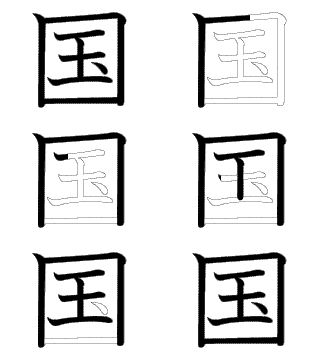
Kanji Card – 国 – kuni

国

56FD - 国

Meaning:country

Onyomi: KOKU

Kunyomi: kuni

Strokes: 8

Vocabulary:

国 – kuni – country

外国人 – gaikokujin – foreigner

国道 – kokudou – national highway

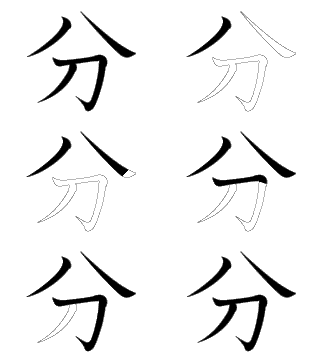
Kanji Card – 分


分

5206 - 分


Meaning: part, minute, to divide, to understand

Onyomi: FUN, BU, FUN

Kunyomi: wa(keru), wa(karu), wa(kareru)

Strokes: 4

Vocabulary:

分 – fun – minute

分かる – wakaru – to understand, to know

分析 – bunseki – analysis

自分 – jibun – oneself

半分 – hanbun – half

十分 – juubun – sufficient, plenty, enough