
5DB2 - 寒
Meaning: cold
Onyomi: KAN
Kunyomi: samu(i)
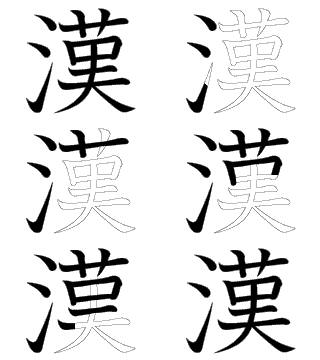
Strokes: 12 (click on the pic to start the video)
Vocabulary:
寒い – samui – cold
寒気 – kanki – chill, shivering, cold air
Learn Nihongo, learn Japanese vocabulary, grammar and kanji
The Japanese language is very flexible with adjectives. The sa-form allows to use an i-adjective as a noun or in other words to add ~ness to it (e.g. useful => usefulness, powerful => powerfulness, etc.)
It is very easy to build. Just replace “i” at the end of the word with a “sa”. So 楽しい (tanoshii, enjoyable) becomes joy as 楽しさ (tanoshisa). Here are a few more examples to make it clear.
| Plain Form | Romaji | Meaning | sa Form | Romaji | Meaning |
| 楽しい | tanoshii | enjoyable | 楽しさ | tanoshisa | joy |
| 美しい | utsukushii | beautiful | 美しさ | utsukushisa | beauty |
| 新しい | atarashii | new | 新しさ | atarashisa | newness |
| 赤い | akai | red | 赤さ | akasa | redness |
| 大きい | ookii | big | 大きさ | ookisa | size, dimensions |
Example sentences:
日本のお寺の美しさが好きです。
nihon no otera no utsukushisa ga suki desu.
I like the beauty of Japanese temples.
Related articles:
kanji: 楽しい
furigana: たのしい
romaji: tanoshii
Meaning: enjoyable
Level: JLPT N5
i-adjective
| Form | Kanji | Furigana | Romaji |
| plain form | 楽しい | たのしい | tanoshii |
| past | 楽しかった | たのしかった | tanoshikatta |
| negation | 楽しくない | たのしくない | tanoshikunai |
| past negation | 楽しくなかった | たのしくなかった | tanoshikunakatta |
| sa form | 楽しさ | たのしさ | tanoshisa |
| sou form | 楽しそう | たのしそう | tanoshisou |




 NIHONGO ICHIBAN