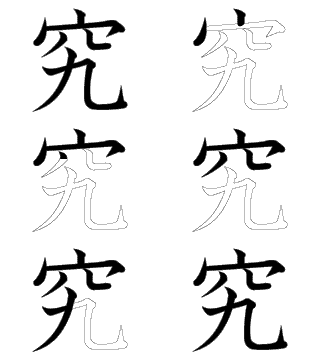
7A76 - 究
Meaning: to explore, to investigate
Onyomi: KYUU
Kunyomi: kiwa(meru)
Strokes: 7 (click on the pic to start the video)
Vocabulary:
研究 – kenkyuu – study, research, investigation
究める – kiwameru – to go to the end, to investigate thoroughly
Learn Nihongo, learn Japanese vocabulary, grammar and kanji
The sou-form of an i-adjective expresses that something seems to be in a certain way. It translates into sentences such as it looks red (akasou).
It is very easy to build. Just replace the last “i” of the adjective with a “sou”. So 楽しい (tanoshii, enjoyable) becomes 楽しそう (tanoshisou). Here are a few more examples to make it clear.
| Plain Form | Romaji | Meaning | sa Form | Romaji |
| 楽しい | tanoshii | enjoyable | 楽しそう | tanoshisou |
| 美しい | utsukushii | beautiful | 美しそう | utsukushisou |
| 新しい | atarashii | new | 新しそう | atarashisou |
| 赤い | akai | red | 赤そう | akasou |
| 大きい | ookii | big | 大きそう | ookisou |
Example sentences:
この料理はとても美味しそうです。
このりょうりはとてもおいしそうです。
kono ryouri wa totemo oishisou desu.
This dish looks very delicious.
Related articles:




 NIHONGO ICHIBAN